
Helen Margaret Lester Plants Award Selection Process
Special sessions will be judged based on their contributions as demonstrated by originality, session content, and presentation including the use of written materials and visual aids, and participation of session attendees.
*For more information, visit the IEEE Education Society Helen Plants Outstanding Conference Special Session Award page.
About Helen Margaret Lester Plants Award
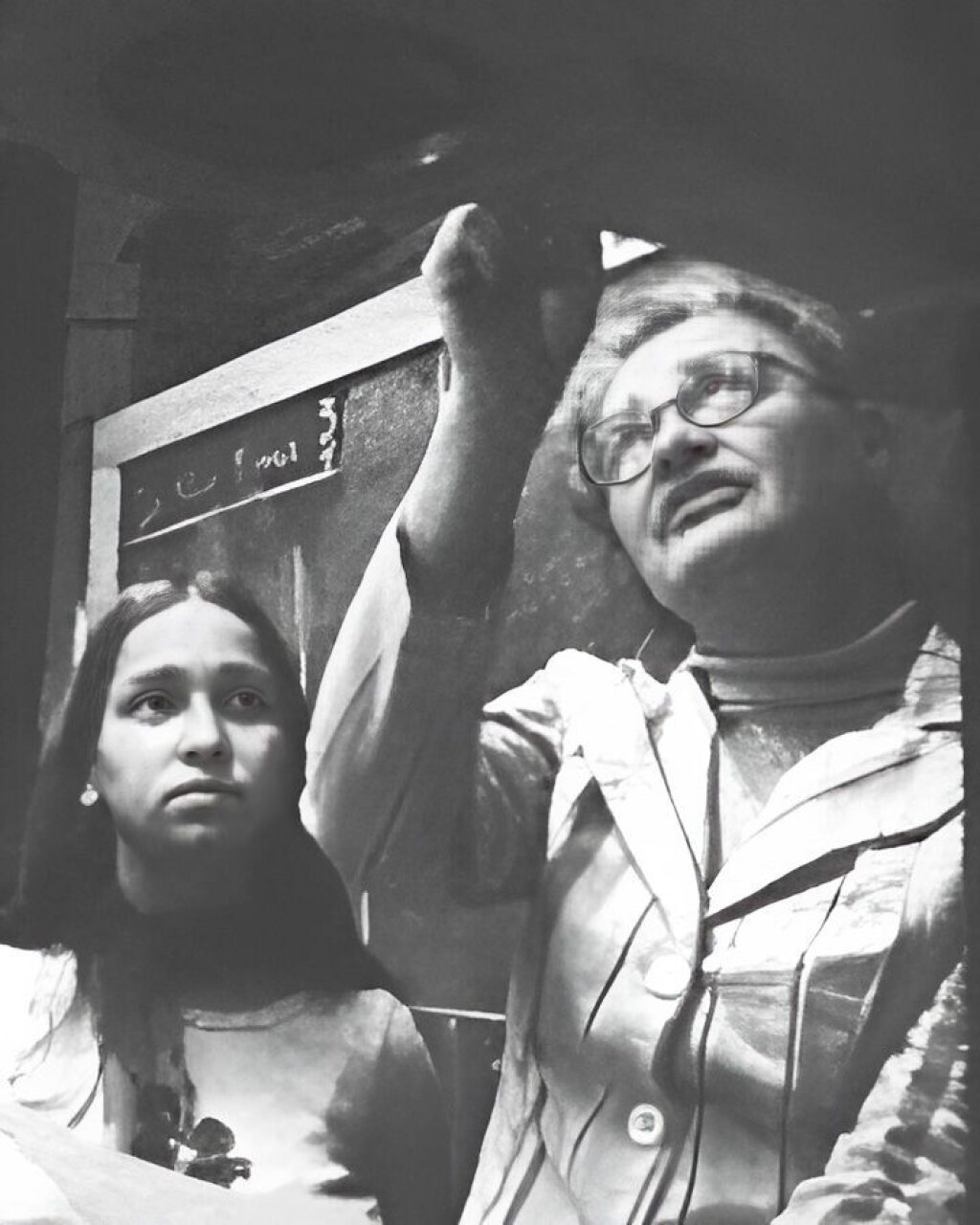
Helen Margaret Lester was born in Desloge, Missouri, in March 1925, the only child of Rollo Bertell and Margaret Stephens Lester. She entered the University of Missouri as a journalism major, but soon switched to Civil Engineering. She received her BSC in 1945. She joined West Virginia University in 1947 as a graduate student and Instructor in Mechanics and received her MS in Civil Engineering in 1953. She was a Professor of Theoretical and Applied Mechanics and of Curriculum and Instruction in the Division of Education at WVU. She became Professor Emeritus, Mechanical and Aerospace Engineering in 1983. From 1985 to 1990 she served as Chair of Civil Engineering technology at Indiana University-Purdue University – Fort Wayne. Her husband, Ken Plants, had been a “bureaucrat” with the US Bureau of Mines in Morgantown – a chemical engineer with great expertise in cost estimation. Some of their “courting” evenings were spent manually checking the design calculations on the Star City, WV bridge, designed by the Dean and State Bridge Engineer. Helen and Ken had a daughter and two sons. Their daughter Francis lives in Tulsa, is a consulting geologist (married to a geologist) and has two daughters of high school/college age. While in Morgantown, Helen was active in Trinity Episcopal Church where she served as a Vestryman and Bishop’s Man. For many years she was a Girl Scout leader. Helen died in Tulsa, Oklahoma in September 1999.
From the beginning of her academic career, she was a gifted teacher and role model for the few women students at West Virginia University at the time. Later, she became an advocate of programmed and individualized instruction. She and Wally Venable wrote a series of papers on these topics and several texts: Introduction to Statics, a Programmed Text (1975), A Programmed Introduction to Dynamics (1967), and Mechanics of Materials, A Programmed Textbook (1974). She established the first doctoral program in Engineering Education at West Virginia University.
In 1975, the University of Missouri at Columbia recognized her with the Missouri Honor Award for Distinguished Service in Engineering. She became an ASEE Fellow in 1983 as a member of the first class of Fellows. She also received Distinguished Service Award, Western Electric Fund Award, and was an ASEE Vice-President (1974 – 1976).
Helen Plants was one of the pioneers in the ASEE Education Research and Methods (ERM) Division. she was chair of ERM for three terms (1970 – 1973) and she served as the Secretary/Treasurer for one year before that. She was a regular contributor to the ERM Magazine and Engineering Education. After the ERM Division became a co-sponsor of FIE, she led the efforts to develop workshops and other creative sessions for the conference. The conference then decided to recognize her creativity and contributions by naming the award for the best non-traditional presentation after her, as she truly exemplified the characteristics that the sessions exemplify.
*Information above provided by Wally Venable, Ed Jones, Jim Stice, and John Lindenlaub.
Past Awardees
-
Year
Presentation
Recipient(s)
2025
-
-
2024
-
-
2023
-
-
2022
Who is a Role Model? An open discussion on the role of role modeling in Engineering Education
Virginia Grande, Bedour Alshaigy, Anne-Kathrin Peters, Mats Daniels
2021
-
-
2020
-
-
-
Year
Presentation
Recipient(s)
2019
-
-
2018
Teaching to Promote a Growth Mindset
Sarah Zappe, Stephanie Cutler, and Thomas Litzinger
2017
Stephanie Cutler, Thomas Litzinger, Sarah Zappe, and Michael Alley
2016
James Huff, Brent Jesie, Carla Zoltowski, Joachim Walther, and William Oakes
2015
Agents for STEM Change – Articulating the Goals of Our Community
Rebecca Bates, Lisa Benson, Alan Cheville, Cynthia Finelli, Jennifer Karlin, Susan Lord
2014
The Lord of PhD: Fellowship of the Dissertation; A Guide to the Engineering PhD
Stephanie Cutler, James J. Pembridge, Matthew Verleger, Lauren D. Thomas
2013
Connecting with Community: Empathy, Experience, and Engineering with Elders
Lynn Andrea Stein, and Caitrin Lynch
2012
Cognitive Processes Critical for Ill-Defined Problem Solving: Linking Theory, Research, and Classroom Implications
Şenay Purzer and Jonathan C. Hilpert
2011
Mark Somerville, Dave Goldberg, Sherra E. Kerns, and Russell Korte
2010
Developing Engineering Student's Philosophical Inquiry Skills
Russell Korte and Karl Smith
-
Year
Presentation
Recipient(s)
2009
Enhancing Student Learning Using the SCALE_UP Format
Lisa C. Benson, Sherrill B. Biggers, William F. Moss, Matthew Ohland, Marisa K. Orr and Scott D. Schiff
2008
Applying Theories of Interdisciplinary Collaboration in Research and Teaching Practice
Maura Borrego, Lynita Newswander, and Lisa McNair
2007
No Award this year
2006
Cognitive Legos: Helping Your Students Construct Scientifically Accurate Mental Models
Ruth A. Streveler, Ronald L. Miller and Karl A. Smith
2005
Ruth A. Streveler
2004
Feminist Frontiers
Susan M. Lord, Elizabeth A. Eschenbach, Alisha A. Waller, Eileen Cashman, and Monica Bruning
2003
Integrating Service Learning into Engineering and Computer Science Courses
William C. Oakes
2002
No Award this year
2001
No Award this year
2000
No Award this year
-
Year
Recipient(s)
1999
Melinda Piket-May and Julie L. Chang
1998
Alice Agogino
1997
Karl Smith, James Jones Elizabeth Eschenbach
1996
Alisha Waller, Edward Doering and Mark Yoder
1995
Burks Oakes and Mark Yoder
1994
Billy Koen
1993
John Lindenlaub and Alisha Waller
1992
Barbara Olds, Ronald Miller and Michael Pavelich
1991
Troy Kostek
1990
No Award this year
-
Year
Recipient(s)
1989
No Award this year
1988
No Award this year
1987
John Lindenlaub
1986
Martha Nord and Patricia Whiting
1985
Billy Koen
1984
David Johnson and Karl Smith
1983
Charles Yokomoto
1982
Karl Smith and Harold Goldstein
1981
Thomas Boyle
1980
John Lindenlaub and James Russell