
Benjamin Dasher Award Selection Process
Each year, the best paper/presentation combination at the FIE meeting is selected to receive the Benjamin Dasher Award. Papers are nominated for the award by reviewers. A committee with representation from each of the organizing societies (ERM, IEEE Ed. Soc., IEEE Comp. Soc.) is formed to review nominated papers. During the FIE meeting, the committee attends presentations of the nominated papers. The committee then makes a final recommendation to the FIE Planning Committee for the Ben Dasher Award winner based on the overall quality of both the paper and the presentation. The winning author(s) are announced at the following year’s FIE meeting.
About Benjamin Dasher Award
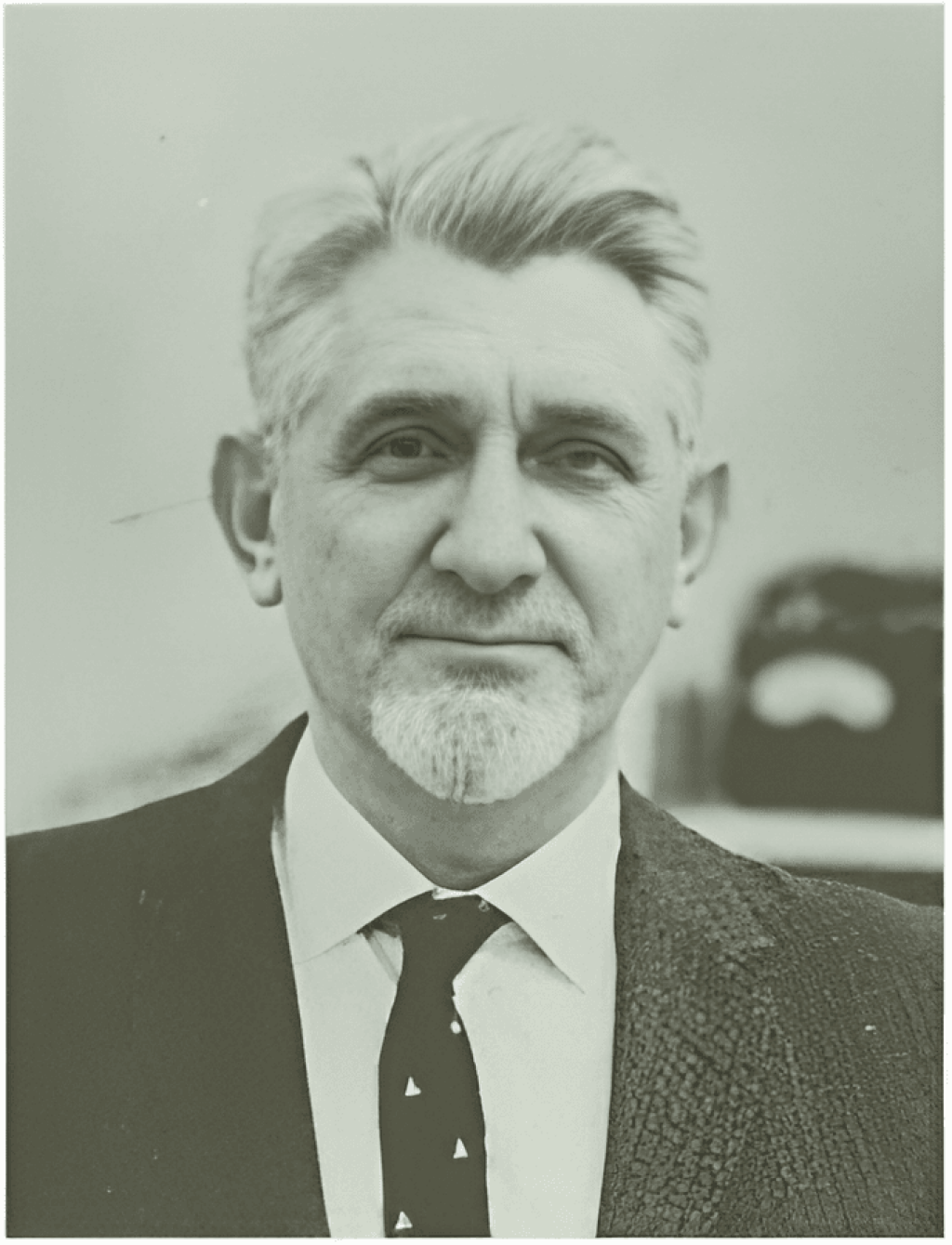
Benjamin J. Dasher was born December 27, 1912 in Macon, GA. He earned his Bachelor’s and Master’s degrees in electrical engineering in 1935 and 1945, respectively, and graduated with a doctorate in electrical engineering in 1952 from the Massachusetts Institute of Technology (MIT). At MIT, Dr. Dasher worked on the electronics of instrumentation of electromechanical transducers and analog-to-digital converters. He was the author of “Dasher’s Method” for synthesis of resistance-capacitance two-port networks, which is found in standard textbook treatments.
While at Georgia Tech, Dr. Dasher served as a graduate assistant in 1936, then as an instructor in 1940. He became an assistant professor in 1945. While earning his PhD at MIT, he was an instructor from 1948-51. Before finishing with his PhD, he became an associate professor at Georgia Tech in 1951, was promoted to professor in 1952, and became director of the School of Electrical Engineering in 1954 serving in that capacity until 1969. In 968, Dr. Dasher was appointed associate dean in the College of Engineering.
At Georgia Tech, Dr. Dasher served as director of network synthesis projects and transistor oscillator projects. His fields of interest included advanced network theory, electronic theory, electronic circuits, electrical engineering education, machine translation, speech analysis, and pattern recognition. He was credited for bringing undergraduate engineering education to the forefront at Georgia Tech and for increasing interactions between undergraduates and industry.
Dr. Dasher was a member of Phi Kappa Phi, ASEE, Sigma Xi, and the American Association of University Professors; he was a Fellow of both the IEEE and the Institute of Radio Engineers. He served as a regional director for IEEE and as the chair for the Atlanta section of IEEE; he was on numerous committees for IRE, AIEE, and IEEE. He served as President of the IEEE Education Group in 1970-71.
Ben Dasher organized the first Frontiers in Education conference held in Atlanta in 1971 with 100 participants. There were 34 papers in six technical sessions. Dr. Dasher died of congestive heart failure on December 13, 1971 in Houston, Texas. The Benjamin J. Dasher award for the Best Paper at the FIE Conference each year recognizes his contributions as the founder of the Frontiers in Education Conference (FIE).
*Contributed by James R. Rowland from materials research by Jackie Nemeth at Georgia Tech.
*Information above provided by Wally Venable, Ed Jones, Jim Stice, and John Lindenlaub.
Past Awardees
-
Year
Presentation
Recipient(s)
2025
-
-
2024
Detecting Unsuccessful Students in Cybersecurity Exercises in Two Different Learning Environments
Valdemar Švábenský, Kristián Tkáčik, Aubrey Birdwell, Richard Weiss, Ryan S. Baker Pavel Celeda, Jan Vykopal, Mache, and Ankur Chattopadhyay
2023
-
-
2022
It's Okay Because I Worked Really Hard! - Student Justifications for Questionable Collaboration while Solving Computer Labs
Camilla Bjorn, Pontus Haglund, Katharina Munz, and Filip Stromback
2021
-
-
2020
-
-
-
Year
Presentation
Recipient(s)
2019
-
-
2018
Understanding the Pathways of Students with Normative Attitudes in Engineering
Beverly Ma, Jacqueline Doyle, Jacqueline Rohde, Hank Boone, Allison Godwin, Geoff Potvin, Lisa Benson and Adam Kirn
2017
Beth Rieken, Mark Schar and Sheri Sheppard
2016
Natasha Nesiba, Enrico Pontelli, and Timothy Staley
2015
Lecia Barker, Jane Gruning
2014
Carry-on Effect in Extreme Apprenticeship
Hansi Keijonen, Jaakko Kurhila, Arto Vihavainen
2013
Applying Philosophical Inquiry: Bringing Future Engineering Education Researchers into the Philosophy of Engineering Education
Robin Adams, Alice Pawley and Brent Jesiek
2012
Kristi J. Shryock, Arun R. Srinivasa and Jeffrey E. Froyd
2011
Jeffrey L. Newcomer
2010
Student Beliefs About Intelligence: Relationship to Learning
Glenda Stump, Jenefer Husman, Wen-Ting Chung and Aaron Done
-
Year
Presentation
Recipient(s)
2009
High School Teacher Change, Strategies, and Actions in a Professional Development Project Connecting Mathematics, Science, and Engineering
Steve Krause, Robert Culbertson, Michael Oehrtman, Marilyn Carlson, Bill Leonard, C.V. Hollot and William Gerace
2008
Combining Collaborative Workspaces with Tablet Computing: Research in Learner Engagement and Conditions of Flow
Eric Hamilton and Andrew Hurford
2007
‘You’re All a Bunch of Fucking Feminists’: Addressing the Perceived Conflict Between Gender and Professional Identities Using the Montreal Massacre
Donna M. Riley and Gina-Louise Sciarra
2006
No Award this year
2005
In-class Active Learning and Frequent Assessment Reform of Nuclear Reactor Theory Course
Gregory A. Moses and Michael Litzkow
2004
Grade-Point Average, Changes of Major, and Majors Selected by Students Leaving Engineering
Matthew W. Ohland, Guili Zhang, Brian Thorndyke, and Timothy J. Anderson
2003
New Pedagogical Approaches in Engineering Mechanics Yield Increased Student Understanding, Confidence, and Commitment
Glenn W. Ellis, Gail E Scordilis, and Carla M. Cooke
2002
A New Pedagogy in Electrical and Computer Engineering: An Experiential and Conceptual Approach
Zeynep Dilli, Neil Goldsman, Lee Harper, Steven I. Marcus, and Janet A. Schmidt
2001
No Award this year
2000
Measuring (and Enhancing?) Student Confidence with Confidence Scores
David W. Petr
-
Year
Presentation
Recipient(s)
1999
Educational Innovations in Multimedia Systems
Wayne Burleson, Aura Ganz and Ian Harris
1998
B. Carlson, W. Jennings and P. Schoch
1997
Edwin Kashy, Sheryl Wolfe, Michael Thoennessen, Yihjia Tsai and Nancy Davis
1996
Val D. Hawks
1995
Curtis A. Carver and Richard Howard
1994
Burks Oakley and Roy Roper
1993
Daniel Hull and Arthur Guenther
1992
Dan Budny and William LeBold
1991
Robert Whelchel
1990
Cindy Greenwood
-
Year
Recipient(s)
1989
Richard Compton and Robert York
1988
Richard Felder
1987
David Conner, David Green, Jannett Thomas, James Jones, M. G. Rekoff, Dennis Smith and Gregg Vaughn
1986
Richard Culver
1985
Billy Koen
1984
Billy Koen
1983
Davood Tashayyod, James Trosino and Banu Onaral
1982
Albert Riemenschneider and Lyle Feisel
1981
Martha Montgomery
1980
Marilla Svinicki
-
Year
Recipient(s)
1979
Donald Woods, Cameron Crowe, Terrence Hoffman and Joseph Wright
1978
Albert Morris
1977
John Renner
1976
John Hipwell and David Baume
1975
John James Allan and J. J. Lagowski
1974
Richard Hooper